


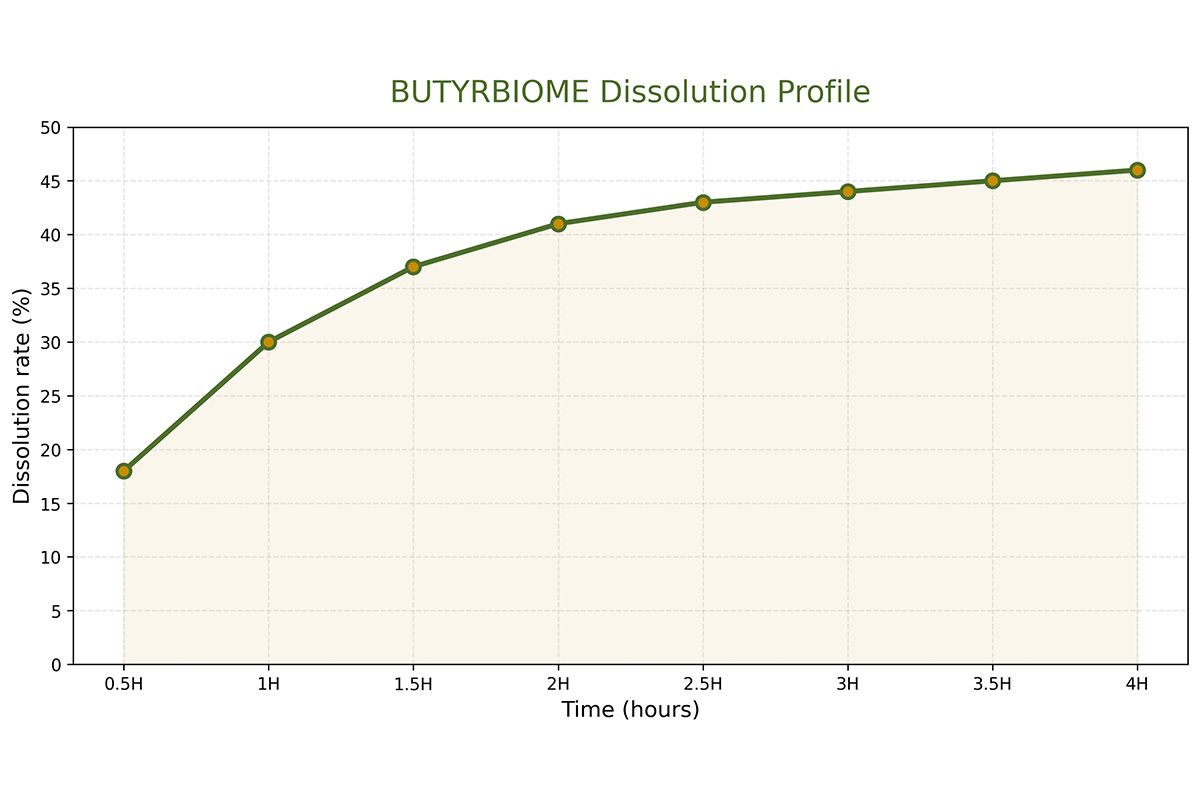
Deodorized sodium butyrate in modulated-release microcapsules, designed to ensure adequate release over time. Butyrate is absorbed by the colonocytes in the proximal colon through passive diffusion and active transport linked to various ion exchange transporters. In the distal colon, the main absorption mechanism is the passive diffusion of the lipophilic form.
Standard sodium butyrate is largely absorbed in the acidic environment of the stomach. The 90% coated, intestine-soluble type was specifically designed to address this issue; enteric-coated sodium butyrate significantly improves gastric tolerance and enables targeted release in the intestine.
Action: support of intestinal health through controlled release of butyrate.
Target Organs: intestine (colon) — gastrointestinal system.
Butyrate is absorbed in the proximal colon both by passive diffusion and through active transport mediated by ion exchange transporters; in the distal colon, the passive diffusion of the lipophilic form predominates. The enteric coating and microencapsulation aim to avoid early absorption in the stomach and to maximize availability in the desired intestinal tract.
The release curve is influenced by:
The increase in the intestinal concentration of SCFAs (short-chain fatty acids), including butyrate, acetate and propionate, after supplementation indirectly indicates effective dissolution and availability of butyrate.
Phase 1 — Stomach (acidic pH)
Uncoated butyrate is largely released and absorbed early; the enteric formulation keeps the payload protected.
Phase 2 — Small intestine
In intestine-soluble formulations the gradual dissolution of the coating begins; modulated release starts to increase.
Phase 3 — Proximal colon
Main release and absorption through active transport and diffusion; peak of local SCFA concentration.
Phase 4 — Distal colon
Residual release of the lipophilic fraction with absorption mainly by passive diffusion.
Please note that this website is not aimed at consumers as the information herein contained does not make reference to finished products; the website is available for various countries all over the world and hence it may contain statements or product classification not applicable to your country.