

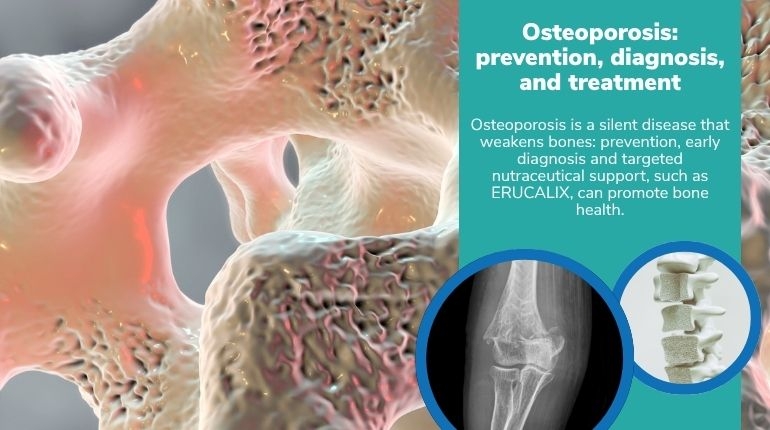
Osteoporosis: prevention, diagnosis, and treatment
Osteoporosis is a widespread condition worldwide, characterized by a reduction in bone mass and alterations in the microarchitecture of bone tissue, resulting in increased fragility and a higher risk of fractures. With population aging, the prevalence of osteoporosis is expected to rise: it is estimated that approximately 200 million people are affected and that around 8.9 million osteoporotic fractures occur each year, particularly in the hip, vertebrae, and forearm. These fractures are associated with high morbidity, increased mortality, and a significant reduction in quality of life, as well as a substantial economic burden on healthcare systems.
Risk Factors
The main risk factors for osteoporosis include advanced age, female sex and postmenopausal status, hypogonadism or early menopause, low body mass index, family history and ethnicity (Caucasian individuals have a higher risk compared to other populations), rheumatoid arthritis, low bone mineral density (BMD), vitamin D deficiency, insufficient calcium intake, hyperkyphosis, smoking, excessive alcohol consumption, immobilization, and prolonged use of medications such as glucocorticoids, anticoagulants, anticonvulsants, aromatase inhibitors, chemotherapeutic agents, and GnRH analogues.
Certain systemic conditions, malabsorption syndromes, and endocrine disorders may lead to secondary forms of osteoporosis.
Diagnosis
Osteoporosis is often a silent condition until a fracture occurs; therefore, screening plays a crucial role. Diagnosis is based on the measurement of bone mineral density (BMD) at the hip and spine using dual-energy X-ray absorptiometry (DEXA).
According to the World Health Organization criteria, osteoporosis is defined by a T-score ≤ −2.5 standard deviations below the mean of a healthy young reference population. BMD is expressed as a T-score: values > −1.0 are considered normal; values between −1.0 and −2.5 indicate osteopenia; values ≤ −2.5 define osteoporosis.
Guidelines recommend DEXA screening for all women ≥65 years, men ≥70 years, postmenopausal women with risk factors or fragility fractures, and individuals undergoing treatment or presenting conditions associated with bone loss.
Bone Turnover Biomarkers
Bone turnover biomarkers (BTMs) reflect the processes of bone formation and resorption and can be measured in serum or urine.
Formation markers include bone alkaline phosphatase (B-ALP), osteocalcin, and P1NP; resorption markers include CTX, NTX, deoxypyridinoline, and TRAP 5b.
Although useful for monitoring treatment response and assessing therapeutic adherence, BTMs are not recommended for the diagnosis of osteoporosis. CTX and P1NP are among the most commonly used markers to assess bone resorption and formation, respectively; however, CTX is influenced by food intake and requires fasting morning sampling.
Prevention
The management of osteoporosis begins with non-pharmacological interventions recommended for all at-risk individuals:
- Fall prevention: correct visual impairments, reduce medications that affect balance, and minimize domestic hazards (slippery floors, obstacles, poor lighting).
- Regular physical activity: weight-bearing exercises, muscle strengthening, and balance training help preserve bone mass and reduce the risk of falls.
- Lifestyle: smoking cessation and avoidance of excessive alcohol consumption.
Adequate nutrition: it is essential to ensure sufficient intake of protein, calcium, and vitamin D. The recommended daily intake of calcium is 1,000 mg/day for adults aged 19–50 and for men aged 19–70; it increases to 1,200 mg/day for women >50 years and men >70 years.
For vitamin D, the recommended dietary allowance (RDA) is 600 IU/day up to 70 years of age and 800 IU/day above 70 years. Postmenopausal women represent a particularly at-risk population and should adhere to these recommendations.
Chronic use of glucocorticoids represents one of the main causes of secondary osteoporosis: these drugs reduce bone formation by inhibiting osteoblast activity, increase bone resorption by stimulating osteoclasts, alter calcium metabolism (reducing intestinal absorption and increasing renal excretion), and promote muscle mass loss, thereby increasing the risk of falls.
For this reason, patients undergoing long-term corticosteroid therapy should be evaluated for osteoporosis risk and monitored periodically.
In this context, nutraceutical supplementation may represent a useful support in the management of bone health, as in the case of specific formulations such as ERUCALIX.