

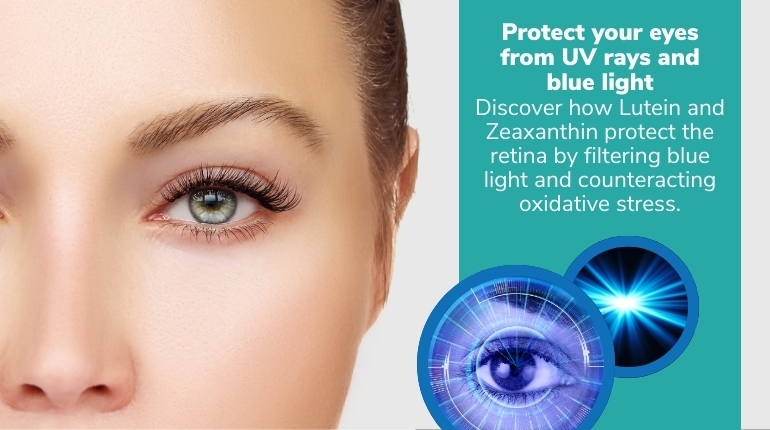
How to protect eyes from UV Rays and Blue Light
The eyes are sensitive organs, constantly exposed to natural and artificial light sources. Unlike the skin—which can activate defense mechanisms such as melanin production or epidermal thickening—the eyes lack equally effective adaptive strategies. Internal protection relies solely on the cornea and lens, which filter out part of the light radiation to prevent it from reaching the retina.
However, this natural barrier is not always sufficient. Ultraviolet (UV) radiation can cause both acute and chronic damage. In the short term, intense exposure may lead to painful inflammation such as photokeratitis or photoconjunctivitis. Over time, prolonged exposure can result in degenerative conditions like cataracts, macular degeneration, and even ocular surface tumors such as squamous cell carcinoma or ocular melanoma.
Practicing caution in sunlight exposure, avoiding peak hours, using lenses with UV filters, and wearing certified sunglasses are essential preventive strategies. These are simple but crucial habits to preserve visual health, especially in individuals more exposed due to profession or lifestyle.
Blue light: a daily threat to the retina
In addition to UV rays, blue light is another potentially harmful form of radiation. It is part of the visible spectrum, with short wavelengths and high energy, ranging from 400 to 500 nanometers. The most critical component is blue-violet light, which can penetrate deeply into the ocular structures and reach the retina.
While in the past blue light primarily came from sunlight, today the main sources are artificial. LED technology, now widely used in household, public, and digital device lighting, emits high amounts of blue light. Computers, smartphones, tablets, and TVs are devices we use for many hours each day, often in poorly lit environments and without taking regular breaks.
Prolonged exposure to blue light can induce oxidative stress in the retina, promoting free radical formation and contributing to degenerative processes. Evening use of digital devices may also disrupt melatonin production and interfere with circadian rhythms, negatively affecting sleep quality.
To counteract these effects, it is advisable to adopt practical strategies such as using blue light filter glasses, adjusting screen brightness, and taking regular breaks when using electronic devices. While these measures do not eliminate the problem, they help reduce visual fatigue and minimize long-term damage.
Lutein and zeaxanthin: natural filters for blue light
Alongside behavioral measures, nutrition plays a key role in visual protection. Two natural carotenoids, lutein and zeaxanthin, have proven essential in defending the retina.
Although more than 750 carotenoids exist in nature, only about 40 are found in the human diet, and only lutein and zeaxanthin accumulate selectively in the retina, particularly in the macula. Zeaxanthin is more concentrated in the central region, where light intensity is highest, while lutein is more abundant in the periphery.
Their presence in these strategic areas is not accidental. Both molecules effectively absorb blue light, acting as natural optical filters. In addition, their chemical structure enables them to neutralize free radicals, performing a significant antioxidant function. As a result, they help protect photoreceptors and the retinal pigment epithelium from damage caused by high-energy light exposure.
Numerous clinical studies have confirmed the effectiveness of lutein and zeaxanthin in increasing macular pigment density, enhancing visual performance in bright environments, and slowing the progression of age-related macular degeneration. Compared to other carotenoids such as beta-carotene or lycopene, these two show greater retinal affinity and higher blue light absorption capacity.
Lutexin®: a clinically targeted ingredient for retinal health
To achieve effective concentrations in the retina, dietary intake alone may not be sufficient. This is why targeted supplementation can be useful, particularly for those with prolonged exposure to screens, outdoor work, or predisposition to ocular conditions.
Lutexin® is an advanced formulation derived from Tagetes erecta, naturally rich in lutein and zeaxanthin in a highly bioavailable form and in the ideal ratio for optimal absorption. It is used in dietary supplements specifically formulated to support retinal protection against blue light and oxidative damage, contributing to the maintenance of healthy vision even in later life. Thanks to its selective absorption in the macula, Lutexin® is a valuable ingredient in the prevention of visual disorders linked to environmental factors and aging.
To learn more about Lutexin®, click here.